GardePro Review: Trail Cameras for Hunting, Wildlife & Outdoor Security
GardePro Review: Trail Cameras for Hunting, Wildlife & Outdoor Security
A good outdoor camera needs to do more than simply take pictures. When a camera is placed deep in the woods, near a property boundary, on a farm, or in a backyard, reliability becomes just as important as image quality. It needs to stay outdoors, detect movement, capture useful footage, and in many cases provide access to images without requiring someone to physically visit the camera.
GardePro has built its product range around exactly this type of outdoor monitoring. The brand specializes in trail cameras designed for hunting, wildlife observation, scouting, backyard monitoring, and property security. Its current lineup includes cellular, Wi-Fi, long-range Wi-Fi, and non-cellular cameras, along with accessories and a thermal monocular.
What makes GardePro particularly interesting is the variety of connectivity options. Some cameras are designed to work with cellular networks, while others use Wi-Fi or operate without wireless connectivity. This gives shoppers more flexibility depending on where the camera will be installed.
But choosing a trail camera is not simply about buying the camera with the highest resolution. Battery life, detection performance, night vision, connectivity, weather resistance, storage, app functionality, and installation all matter.
This GardePro review explores the brand's approach, its major camera categories, popular models, useful features, everyday applications, potential limitations, and who may find GardePro worth considering.
What Is GardePro?
GardePro is an outdoor camera brand focused primarily on trail cameras for hunting, wildlife observation, scouting, backyard monitoring, and property security.
The brand currently organizes its camera lineup into several categories, including cellular trail cameras, Wi-Fi trail cameras, non-cellular trail cameras, and long-range Wi-Fi cameras.
Its website also offers accessories such as SD cards, antennas, solar panels, battery covers, security boxes, mounting equipment, waterproof seal strips, and power adapters.
This broader ecosystem means customers can build an outdoor monitoring setup rather than purchasing a camera completely in isolation.
Why Trail Cameras Are Useful
Trail cameras are designed for situations where continuously watching an area manually is impractical.
A properly positioned camera can monitor an outdoor location and capture images or videos when movement is detected.
This can be useful for:
Wildlife observation
Hunting and scouting
Backyard monitoring
Farm observation
Property security
Bird watching
Remote land monitoring
Outdoor research
Checking animal activity
The best use case depends on the specific camera and its connectivity capabilities.
GardePro's Main Camera Categories
One of GardePro's strengths is the number of camera types available.
Rather than expecting every customer to use the same kind of system, the brand offers several connectivity options.
Cellular Trail Cameras
Cellular cameras are designed for remote monitoring through a cellular network.
This can be especially useful when the camera is located far from a home or Wi-Fi connection.
Certain GardePro cellular models support features such as live viewing, instant alerts, GPS tracking, and AI-based recognition.
The exact features vary by model and network configuration.
Wi-Fi Trail Cameras
Wi-Fi models are another option for customers who have access to a suitable wireless network or want to transfer images without removing the storage card.
Some GardePro Wi-Fi cameras can be managed through the company's app, allowing users to interact with the camera from a nearby location.
Long-Range Wi-Fi Cameras
GardePro also offers long-range Wi-Fi technology.
The Link 1.0 is currently marketed as a long-range Wi-Fi trail camera with a stated range of up to 3,000 feet or 1 kilometer under suitable conditions.
This type of setup can be particularly interesting for users who want wireless connectivity across a large outdoor area without relying on cellular service.
Non-Cellular Trail Cameras
For shoppers who do not need remote connectivity, non-cellular models provide a simpler approach.
These cameras can be useful for conventional wildlife monitoring and hunting applications where the user is comfortable retrieving the camera or its storage media periodically.
This can also make the setup less dependent on cellular service or Wi-Fi availability.
GardePro X66 Pro Cellular Trail Camera
The X66 Pro is one of the more feature-focused cameras in GardePro's current lineup.
The company lists it as a cellular trail camera equipped with a rechargeable lithium battery and built-in GPS tracking.
Cellular functionality makes this type of camera particularly useful for remote locations where physically checking the camera every day is inconvenient.
The ability to access footage remotely can save considerable time for hunters, landowners, and outdoor enthusiasts.
However, cellular cameras also introduce another consideration: network availability and dataplan requirements.
Before choosing a cellular model, shoppers should make sure the intended location has compatible cellular coverage.
GardePro X66 3.0 Ultra AI Cellular Camera
The X66 3.0 Ultra represents the brand's more advanced direction.
GardePro currently highlights a 17,500mAh battery for this model and positions it as a longrunning cellular camera.
It also incorporates AI-oriented features into the camera experience.
For people monitoring remote areas, extended battery capacity can be especially useful because fewer visits may be required to maintain the camera.
Still, actual battery life depends on factors such as temperature, network conditions, capture frequency, video settings, and usage patterns.
GardePro A60 4K Trail Camera
The A60 is another notable model in the lineup.
GardePro highlights its Sony STARVIS sensor and 4K video capability.
High-resolution recording can be valuable when image detail matters, particularly for wildlife observation or identifying animals captured at a distance.
However, higher resolution can also increase storage requirements and potentially affect battery consumption, depending on how the camera is configured.
This is why resolution should be considered alongside battery capacity and storage rather than treated as the only measure of camera quality.
GardePro E8 2.0 Pro Wi-Fi Camera
The E8 2.0 Pro takes a different approach by focusing on Wi-Fi connectivity.
GardePro currently highlights dual antennas for stronger signal performance and describes the camera as having no subscription fee.
This can make the model appealing to users who want wireless access without moving into a cellular-camera setup.
For backyard wildlife observation or locations within practical Wi-Fi range, this type of camera can provide a useful middle ground between a traditional SD-card camera and a fully cellular system.
GardePro Link 1.0 Long-Range Wi-Fi Camera
The Link 1.0 is designed for customers who need wireless connectivity over a larger outdoor distance.
GardePro states a range of up to 3,000 feet or 1 kilometer.
The practical range will naturally depend on environmental conditions, obstacles, terrain, interference, and placement.
For an open property with a suitable layout, however, long-range Wi-Fi can be an interesting alternative to traditional Wi-Fi or cellular connectivity.
Image and Video Quality
Image quality is one of the most important considerations when buying a trail camera.
GardePro offers models with different image and video capabilities, including cameras promoted around 4K recording and high-resolution photography.
Higher resolution can provide more detail, but the usefulness of that detail depends on the distance from the subject, lighting conditions, movement, lens quality, and camera placement.
A camera producing an impressive specification on paper still needs to be positioned correctly to capture useful footage.
Night Vision
Outdoor animals do not follow a daytime schedule.
For wildlife observation and security applications, nighttime performance is therefore extremely important.
GardePro offers models with infrared and no-glow-style nighttime technologies, depending on the specific camera.
This can help capture activity in low-light environments while reducing the visible disturbance that traditional bright illumination might cause.
Nighttime image quality can vary considerably between models, so customers who primarily monitor after dark should pay particular attention to the individual camera's night-vision specifications.
Motion Detection
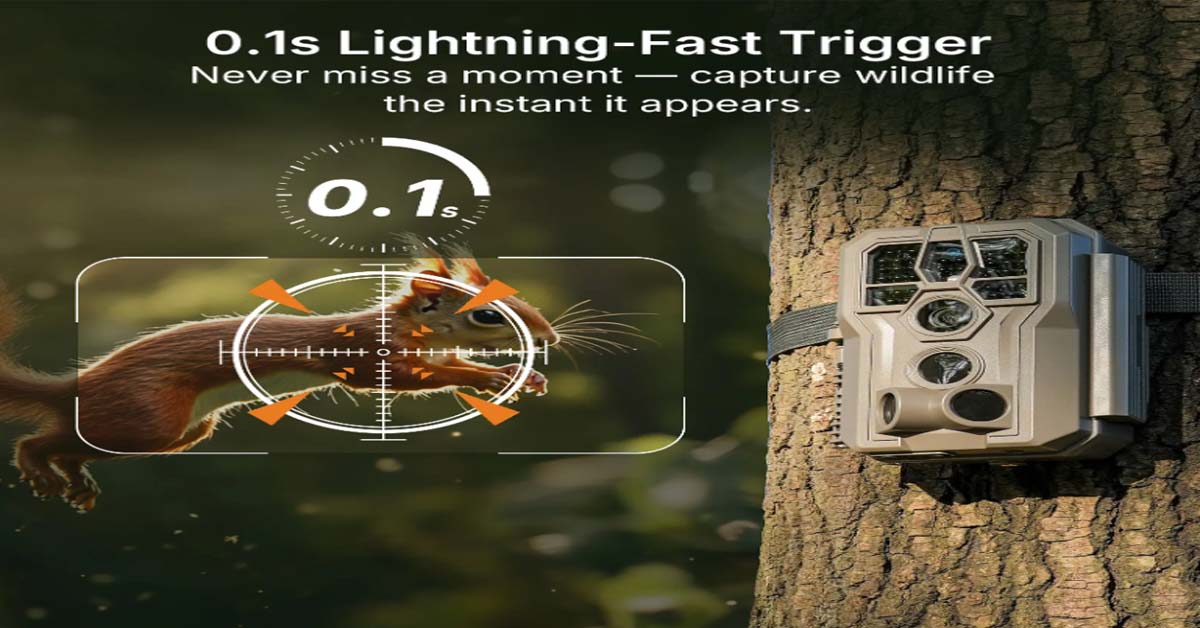
Trail cameras depend heavily on motion detection.
The camera needs to recognize movement and trigger image or video capture without unnecessary false activations.
Motion detection can be affected by:
Animal size
Distance from the camera
Movement direction
Temperature
Vegetation
Wind
Camera placement
Detection sensitivity
For wildlife monitoring, positioning is just as important as the camera's technical specifications.
A camera pointed directly at a frequently moving branch may generate unnecessary recordings, while a poorly positioned camera can miss animals passing through the area.
Live Viewing and Remote Monitoring
Remote access is one of the biggest differences between traditional trail cameras and connected models.
GardePro's cellular lineup can provide capabilities such as live viewing and instant alerts, depending on the model.
The company's app is designed to help users manage compatible cameras and view or receive information remotely.
For someone monitoring land located several miles away, this can be considerably more convenient than physically visiting the camera.
GPS Tracking
Some GardePro cellular cameras include GPS functionality.
This can be useful when multiple cameras are deployed across a large property.
Instead of relying solely on memory or physical labels, GPS information can help users keep track of camera locations.
This feature becomes more valuable as the number of cameras in a monitoring system increases.
AI Recognition
GardePro has also incorporated AI recognition into some newer cameras.
The purpose of AI-based recognition is to help distinguish or categorize detected subjects.
For wildlife monitoring, this can potentially make large numbers of recordings easier to review.
However, AI recognition should be viewed as an assistance feature rather than an infallible identification system.
Environmental conditions and unusual subjects can affect recognition accuracy.
Battery Life
Battery performance is critical for trail cameras because they may be installed in places that are difficult to reach.
GardePro offers cameras with different power configurations, including rechargeable batteries and options involving solar panels.
Some newer models advertise particularly large battery capacities.
But advertised capacity should not be confused with guaranteed operating time.
A camera that records frequently, uses cellular connectivity, captures long videos, or operates in cold weather can consume considerably more energy than one recording occasional photos.
Solar Power Options
GardePro also sells solar panels as accessories.
A solar setup can reduce the frequency with which users need to access a camera for battery maintenance, depending on weather and installation conditions.
Solar power is especially interesting for cameras installed in remote areas.
However, the panel needs suitable exposure to sunlight, and the overall system should still be configured with realistic expectations for seasonal weather and energy consumption.
Weather Resistance
Outdoor cameras need to withstand environmental exposure.
GardePro states that its cameras use IP66 waterproof housing designed to withstand rain, snow, and dust.
This is an important feature for trail cameras because they may remain outside for weeks or months.
Even with weather-resistant housing, careful installation remains important.
Water resistance does not mean a camera should be placed carelessly in locations where standing water, extreme exposure, or physical impact is likely.
GardePro for Hunting and Scouting
Hunting and scouting are central use cases for GardePro.
Trail cameras can help users observe animal movement patterns, determine which areas have activity, and understand how wildlife uses a particular property.
Cellular models can be particularly useful for remote scouting because users may receive information without physically visiting the camera.
Non-cellular cameras can provide a simpler alternative when remote access is not required.
GardePro for Wildlife Observation
You do not have to be a hunter to benefit from a trail camera.
Wildlife enthusiasts can use these cameras to observe animals that are difficult to see in person.
A camera positioned near a natural path, water source, or other active area can reveal wildlife behavior that might otherwise go unnoticed.
This can be particularly enjoyable for people interested in deer, birds, small mammals, and nocturnal wildlife.
GardePro for Backyard Monitoring
A backyard is another practical location for a trail camera.
You may want to discover which animals visit your yard at night or monitor an area that is not easily visible from inside the home.
A Wi-Fi camera can be particularly convenient when the backyard is within an appropriate wireless range.
For smaller spaces, a simpler non-cellular camera may be enough.
GardePro for Farm and Property Security
Large properties can create unique monitoring challenges.
A single traditional security camera may not be practical when the property covers a large area without convenient power or internet access.
Trail cameras can offer a more flexible option because they are designed to operate outdoors and can be positioned away from buildings.
Cellular connectivity can be especially useful where Wi-Fi infrastructure is unavailable.
Of course, local laws and privacy considerations should always be taken into account when monitoring property or areas where other people may be present.
The GardePro App
Connected GardePro cameras can be managed through the brand's app.
Depending on the model, users may be able to view footage, manage settings, receive alerts, and access other connected-camera functions.
The app experience is therefore an important part of the overall product rather than simply an optional extra.
Before buying a particular camera, it is worth checking which app features are actually supported by that model because cellular and Wi-Fi cameras do not necessarily offer identical functionality.
Storage and SD Cards
Non-cellular cameras generally rely more heavily on local storage.
GardePro offers SD cards as part of its accessory ecosystem.
Storage requirements depend heavily on the camera settings.
High-resolution photos and especially longer video recordings consume more storage space, so users who expect frequent activity should choose storage capacity accordingly.
It is also useful to manage old footage regularly so the camera does not become unnecessarily cluttered with recordings.
Installation and Camera Placement
A good trail camera is only as useful as its placement.
When installing one, consider:
Height above the ground
Direction of the lens
Distance from expected activity
Sun position
Nearby branches
Wind movement
Potential water exposure
Cellular or Wi-Fi signal
Accessibility for maintenance
Avoid pointing the camera directly toward a rising or setting sun whenever possible.
Similarly, remove branches or vegetation that may constantly move in front of the lens.
Good placement can improve the usefulness of motion detection and reduce unnecessary recordings.
Accessories for a More Complete Setup
GardePro offers several accessories that can complement its cameras.
These include:
Solar panels
Security boxes
Camera mounts
SD cards
Additional antennas
Battery covers
Waterproof seal strips
Power adapters
This is useful for customers who want to create a more permanent monitoring installation rather than simply attaching a camera to a tree and leaving it.
What Customers Like About GardePro
Customer feedback published by GardePro highlights several recurring positives.
Users frequently praise image quality, ease of setup, Wi-Fi functionality, and the ability to monitor cameras remotely.
Some customers also appreciate being able to view footage without physically removing the storage card.
The brand's published customer experiences include positive comments about wildlife photography, remote monitoring, and the number of available camera settings.
These are individual experiences rather than guarantees, but they provide useful insight into what existing customers value about the products.
Things to Consider Before Buying
GardePro has a broad lineup, but there are several factors worth considering before choosing a camera.
Connectivity Is Important
A cellular camera may be unnecessary if you have reliable Wi-Fi nearby.
Likewise, a Wi-Fi camera may not be suitable for a remote hunting property with no usable wireless connection.
Choose connectivity based on the installation location.
Cellular Cameras May Require a Data Plan
Remote cellular monitoring generally depends on cellular connectivity and an applicable data service.
This creates an ongoing consideration that does not apply in the same way to basic non-cellular cameras.
Higher Resolution Uses More Storage
4K and high-resolution recording can be useful, but it also creates larger files.
Make sure your storage setup matches the recording settings you plan to use.
Battery Life Varies
Battery performance depends heavily on actual usage.
Frequent triggers, video recording, wireless communication, and cold temperatures can all affect runtime.
Placement Takes Some Planning
Even the most advanced camera cannot compensate for poor positioning.
Spend time choosing the location before finalizing the installation.
Which GardePro Camera Type Is Right for You?
Choosing between the different categories becomes easier when you start with the location.
Choose Cellular If:
The camera is in a remote area
Wi-Fi is unavailable
You want remote access
You want alerts from a distant location
You need GPS or live-view functionality on a compatible model
Choose Wi-Fi If:
The camera is within practical Wi-Fi range
You want wireless access without cellular connectivity
The camera will be used around a home or property
Choose Non-Cellular If:
You want a straightforward setup
Remote access is not important
You are comfortable retrieving the camera or storage card
You want fewer connectivity considerations
Choose Long-Range Wi-Fi If:
You have a large property
A standard Wi-Fi connection is insufficient
You want wireless access over a greater distance
Who Is GardePro Best For?
GardePro may be particularly appealing to:
Hunters and outdoor enthusiasts
Wildlife photographers
Backyard bird watchers
Property owners
Farmers
Land managers
People monitoring remote locations
Outdoor hobbyists
Users who want connected trail cameras
It may be less appropriate for someone looking for a conventional indoor security camera or a simple home webcam.
GardePro's products are specifically oriented toward outdoor monitoring and trail-camera applications.
How to Get the Most From a GardePro Camera
Getting good results does not necessarily require complicated equipment.
Start by identifying the area you want to monitor.
Then choose the appropriate camera type based on connectivity.
Install the camera at a sensible height and angle.
Test the detection area before leaving it unattended.
Check the signal strength if you are using a connected model.
Finally, review the camera periodically to make sure the lens remains clean and the power source is functioning properly.
These simple steps can make a significant difference to the quality of your recordings.
GardePro's Overall Design Philosophy
GardePro appears to focus on giving outdoor users more control over how they monitor their environment.
The lineup ranges from straightforward non-cellular cameras to connected models with remote monitoring, GPS, AI recognition, and live-view capabilities.
This makes the brand more flexible than a company that offers only one type of trail camera.
The trade-off is that customers have more decisions to make.
You need to understand the differences between cellular, Wi-Fi, long-range Wi-Fi, and noncellular systems before choosing the right product.
Is GardePro Worth Exploring?
GardePro is an interesting brand for anyone specifically searching for an outdoor trail camera rather than a conventional home security camera.
Its current range covers a wide variety of needs, from basic wildlife observation to remote cellular monitoring.
The availability of different connectivity types is arguably one of the company's strongest advantages.
Its newer models also demonstrate a move toward more advanced features, including highresolution video, AI recognition, GPS tracking, rechargeable power systems, and remote access.
However, those additional features are not automatically necessary for every user.
Someone monitoring a backyard bird feeder may have very different needs from someone managing cameras across a remote hunting property.
Overall Impression
GardePro has developed a broad trail-camera ecosystem that combines outdoor durability with several levels of connectivity and functionality.
Its cameras can be used for hunting, wildlife observation, backyard monitoring, farm applications, scouting, and certain property-monitoring situations.
The variety of models is particularly useful because customers can choose between cellular, WiFi, long-range Wi-Fi, and non-cellular designs.
The brand's more advanced cameras also show how trail cameras are moving beyond simple motion-triggered photographs.
Features such as live viewing, GPS tracking, AI recognition, rechargeable batteries, and higher-resolution recording can make remote monitoring considerably more convenient.
At the same time, shoppers should avoid choosing based solely on specifications.
Connectivity, battery consumption, storage requirements, environmental conditions, and camera placement all have a major effect on real-world usefulness.
Final Verdict
GardePro is a compelling option for outdoor enthusiasts who want more flexibility from a trail camera.
Its lineup covers simple wildlife cameras as well as more connected systems designed for remote monitoring.
That range makes it possible to select a product according to the environment rather than forcing every user into the same setup.
For hunters and wildlife enthusiasts, features such as high-resolution recording, night vision, motion detection, and remote access can make monitoring considerably easier.
For property owners and farmers, cellular or long-range wireless options can provide useful alternatives where traditional security cameras are difficult to install.
The most important consideration is choosing the right camera category for your location and purpose.
Overall, GardePro stands out as a versatile trail-camera brand with a strong focus on outdoor monitoring, connectivity, and practical features.
Whether the goal is watching wildlife in a backyard or monitoring activity across a remote property, the brand offers enough variety to make a careful comparison worthwhile.